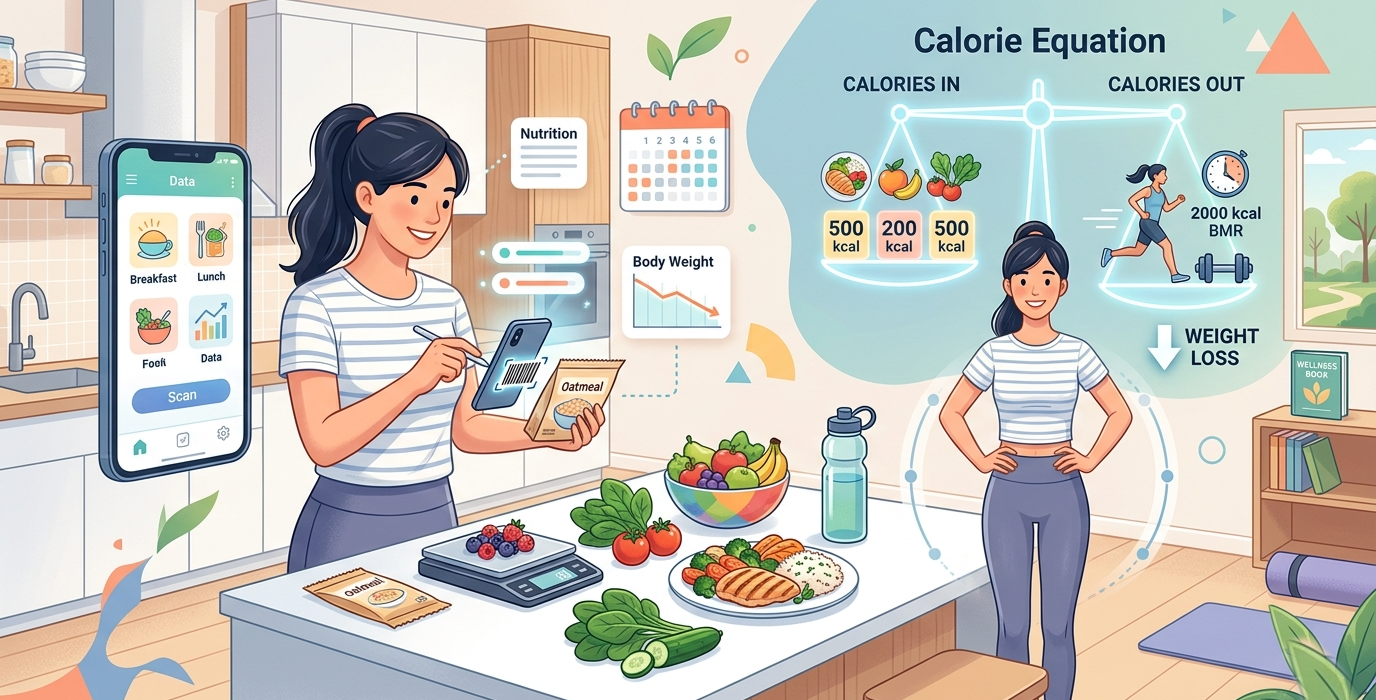
How To Count Calories For Weight Loss
Most people don’t fail at weight loss because they lack motivation. They fail because they underestimate how much they eat.
A spoonful of peanut butter becomes three. A takeaway listed as 900 calories is actually closer to 1,400 once sauces and sides are included. Drinks get ignored. Weekend eating turns into damage control by Monday morning. It adds up fast.
That’s why calorie counting for weight loss still works so well. It removes the guesswork. You stop relying on whether a meal feels “healthy” and start looking at measurable intake instead.
Research published in JAMA highlighted calorie counting as one of the most practical approaches for weight control because it increases awareness of eating behaviour and portion sizes. That awareness matters more than most people think. You can’t consistently change what you don’t accurately measure. 1
The good news is that calorie counting isn’t complicated once you understand the basics. You don’t need perfect maths, expensive meal plans, or extreme diets. You just need a system you can stick to long enough to see results.
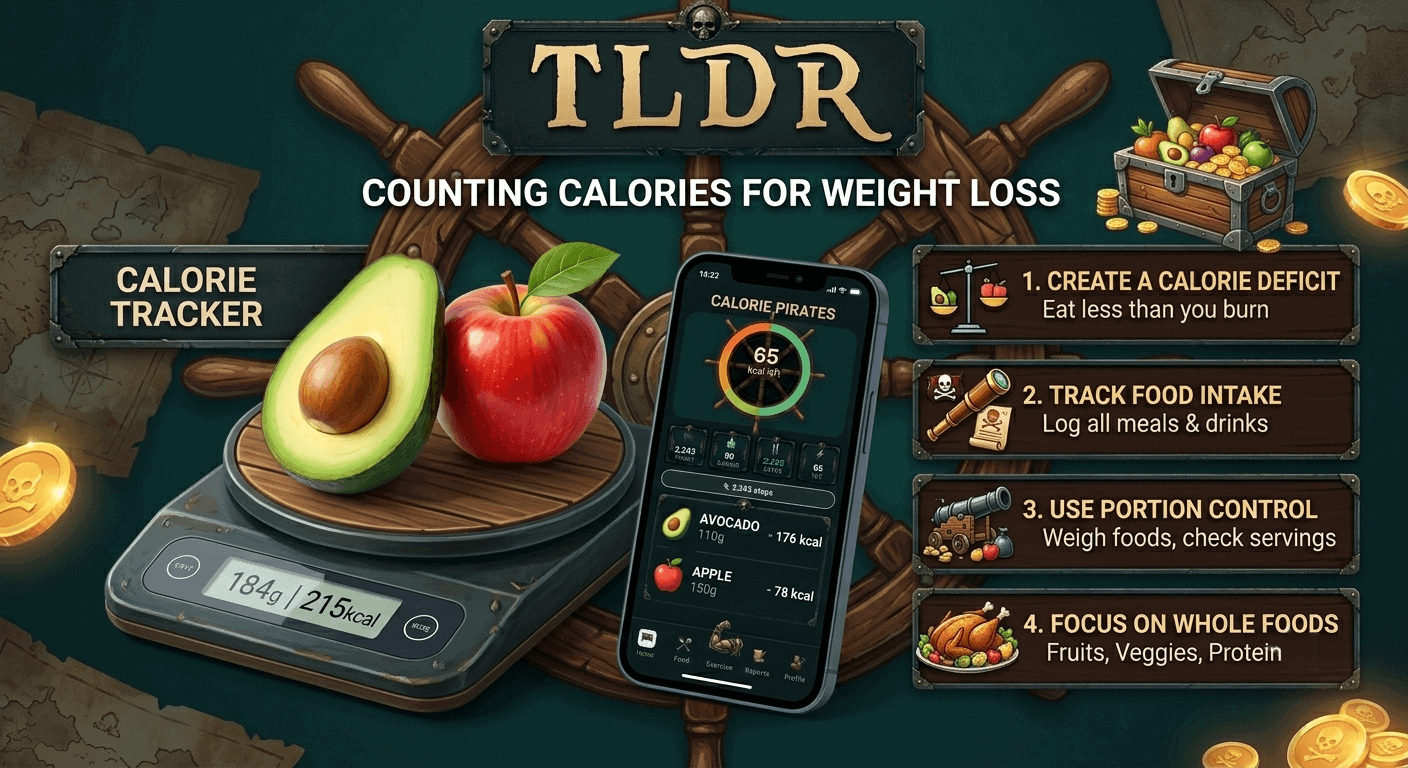
TLDR
Calorie counting is one of the most effective and proven ways to lose weight because it helps you create a consistent calorie deficit — the key driver behind fat loss. By tracking the calories you eat and understanding your daily energy needs, you can lose weight without completely cutting out your favourite foods or following extreme diets. The most successful approach is accuracy, consistency, and choosing filling, nutrient-dense foods that help control hunger while staying within your calorie target.
To count calories for weight loss successfully, calculate your maintenance calories, set a realistic deficit, track your food intake honestly, and monitor your progress over time rather than day to day. Apps like Calorie Pirates can make the process faster and easier by helping you log meals, track progress, and stay accountable. Sustainable weight loss comes from building habits you can maintain long term — not from crash dieting or trying to lose weight as quickly as possible.
For beginners just starting calorie counting, learning the best way to count calories for weight loss involves understanding both total intake and macro distribution. Many people ask how to count calories without a scale, which is possible using portion guides and estimation techniques.
What Is Calorie Counting For Weight Loss?
At its core, calorie counting means tracking how much energy you consume through food and drinks each day. Your body burns energy constantly through breathing, movement, digestion, exercise, and basic survival functions. Weight loss happens when you consistently consume fewer calories than your body burns.
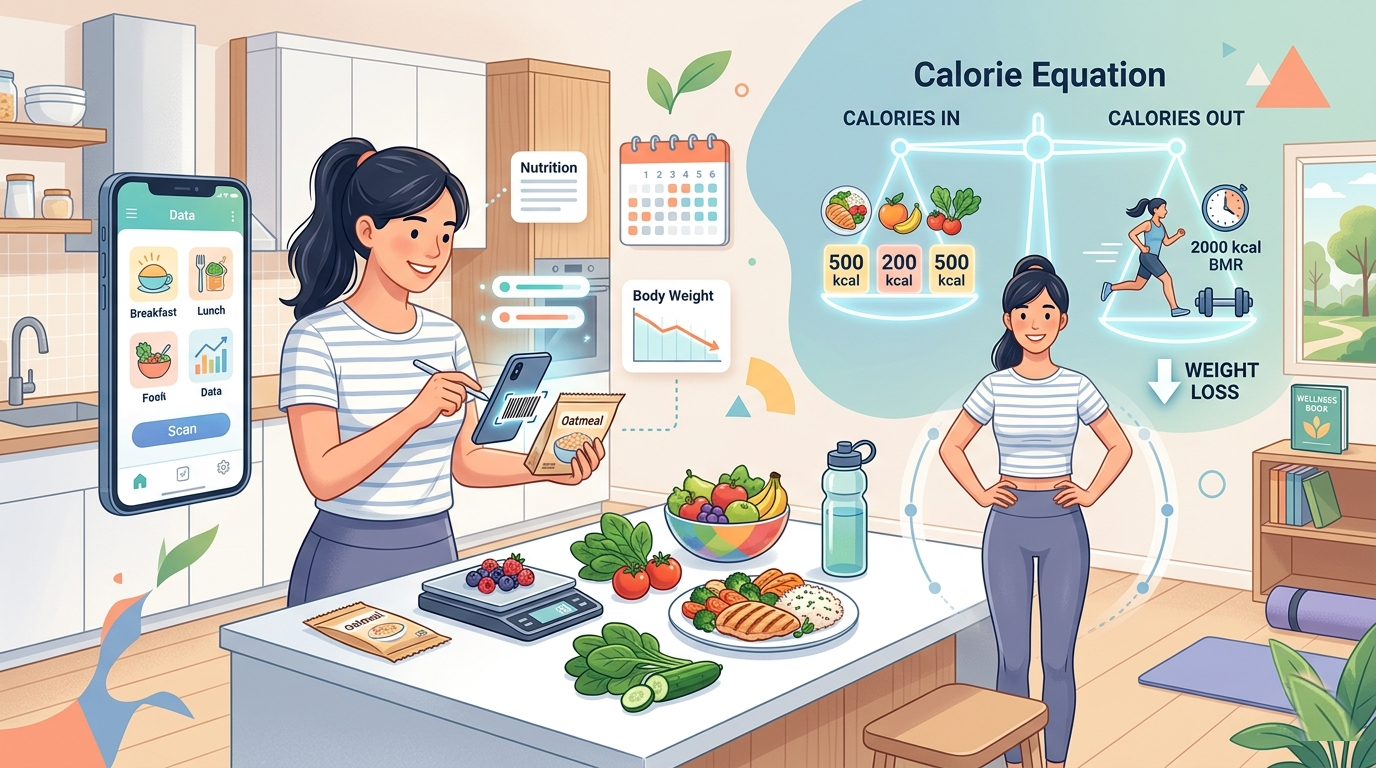
That gap is called a calorie deficit.
If your body needs 2,500 calories per day to maintain weight and you consistently eat 2,000, your body has to pull stored energy from somewhere else. Usually, that means body fat.
Simple in theory. Harder in practice.
What A Calorie Actually Is
A calorie is a unit of energy. Food contains calories because your body can use it as fuel.
Protein and carbohydrates contain roughly 4 calories per gram. Fat contains around 9 calories per gram. Alcohol contains 7. That’s why high-fat foods can become calorie dense very quickly even when portions look small.
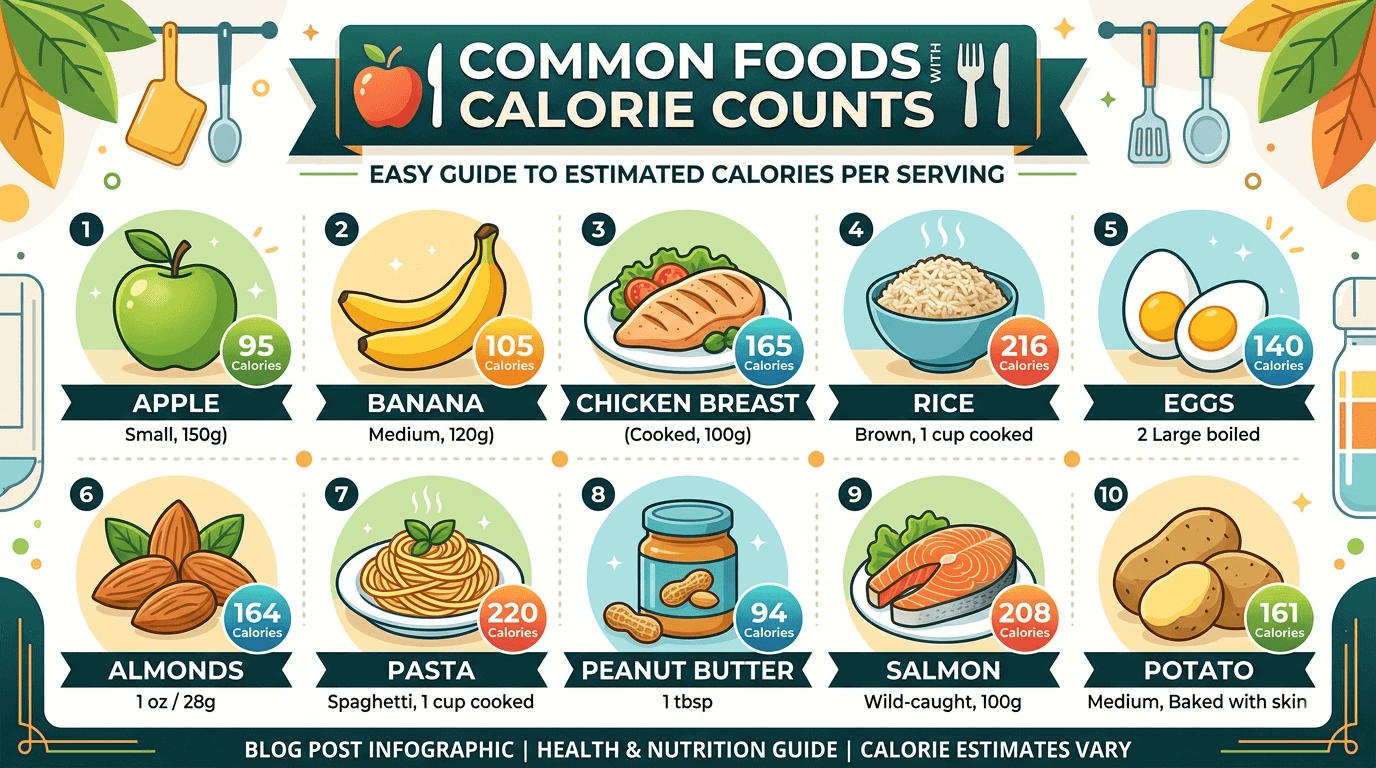
Take nuts as an example. They’re nutritious, but a few handfuls can easily exceed 600 calories. Olive oil is another common trap. One tablespoon contains roughly 120 calories, yet many people pour two or three into a frying pan without thinking.
This is where calorie counting changes behaviour. You start seeing food differently.
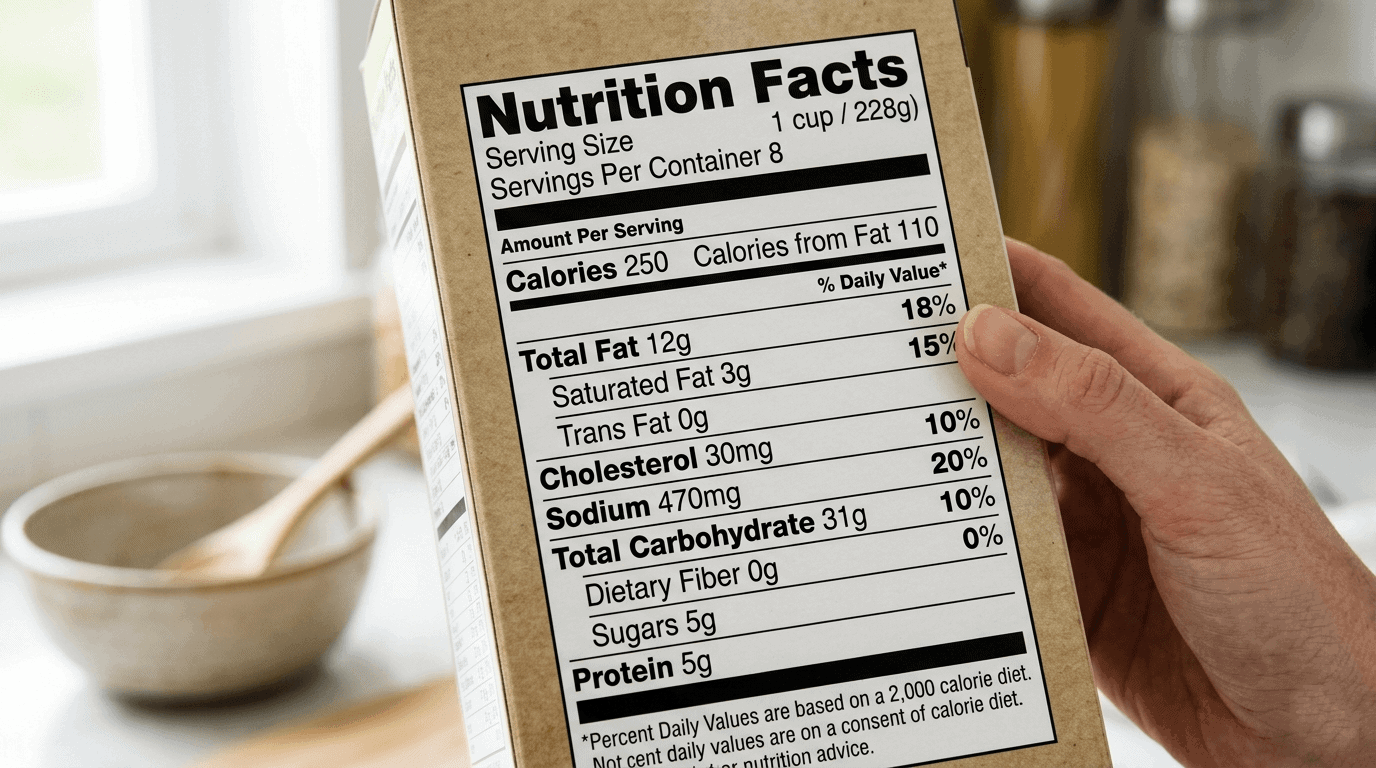
Why A Calorie Deficit Causes Weight Loss
Many diets try to reinvent the wheel. Keto. Low-fat. Juice cleanses. Intermittent fasting. Most successful approaches still rely on the same mechanism underneath: reducing overall calorie intake.
A review on low-calorie diets and sustained weight loss found that calorie reduction remains one of the central drivers of long-term fat loss success. Different diet styles can help people adhere to a deficit, but the deficit itself still matters most. 3
That doesn’t mean every calorie affects your body identically. Protein helps preserve muscle mass and improves fullness. Ultra-processed foods often make overeating easier. Food quality matters for health and appetite control.
But if you consistently eat above your maintenance calories, fat loss becomes difficult no matter how “clean” the food sounds.
The Difference Between Fat Loss And Scale Weight
This part trips people up constantly.
Your weight can fluctuate several pounds within days due to water retention, sodium intake, stress, hormones, digestion, or carbohydrate intake. That doesn’t automatically mean you gained fat.
One high-calorie takeaway meal can push the scale up temporarily because carbohydrates and sodium increase water retention. The same thing happens after a weekend of overeating or drinking alcohol.
Fat gain happens more slowly than most people think.
Roughly speaking, gaining one pound of body fat requires around 3,500 excess calories above maintenance. That doesn’t mean calorie tracking is exact down to the number, but it gives useful perspective.
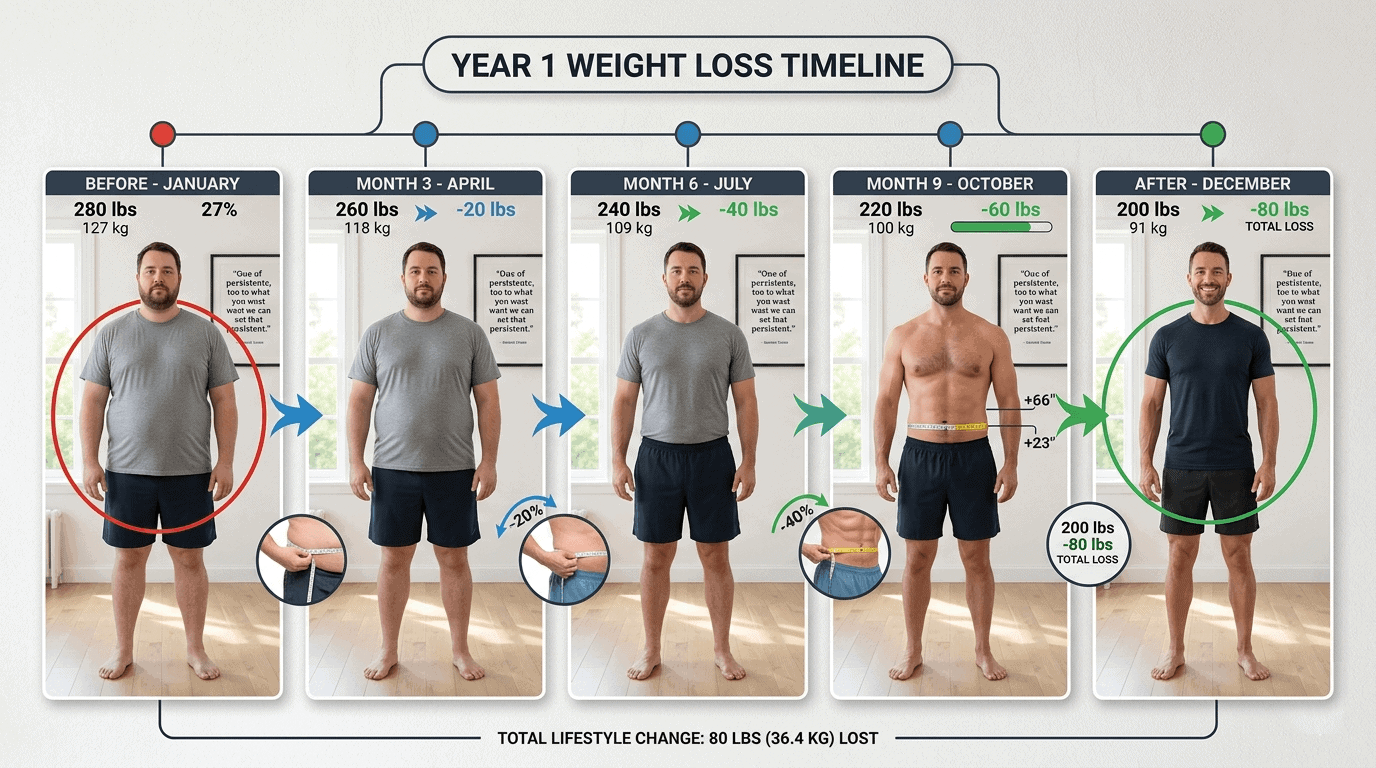
Daily weigh-ins help many people because they show trends instead of emotional reactions to single measurements.
How Many Calories Should You Eat Per Day?
This is the question everyone asks first. Unfortunately, there’s no universal number.
Some people lose weight eating 2,500 calories daily. Others gain weight on 2,000. Body size, activity levels, age, muscle mass, and sex all influence energy needs.
The average calorie recommendations you see online are only rough starting points.
Understanding Maintenance Calories
Maintenance calories are the number of calories your body needs to stay at the same weight.
A tall, active man working a physical job may maintain weight at 3,000 calories or more. A smaller sedentary woman may maintain closer to 1,800.
This is why copying somebody else’s diet rarely works well.
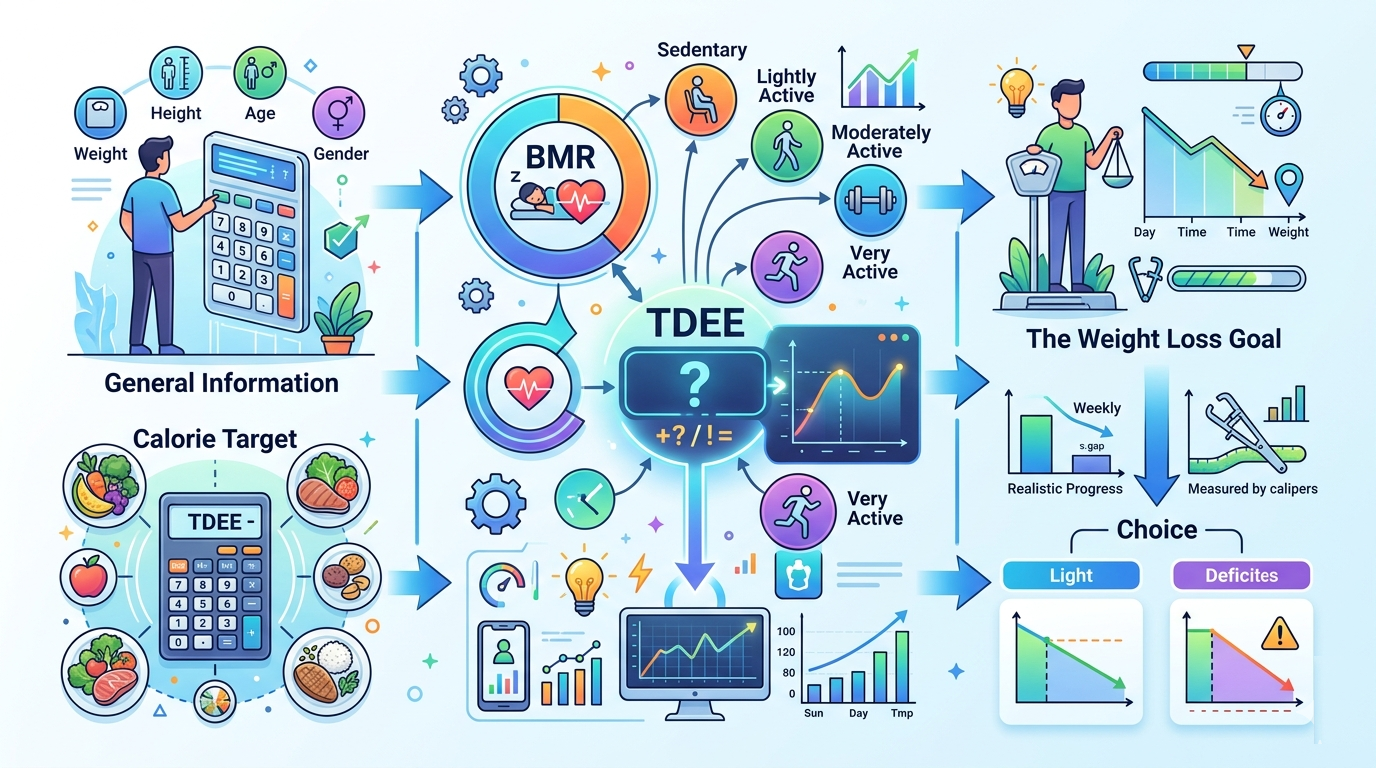
Online calculators can estimate maintenance calories based on height, weight, age, and activity levels. They aren’t perfect, but they provide a reasonable starting point.
From there, real-world results matter more than formulas.
Creating A Safe Calorie Deficit
Aggressive dieting sounds appealing at first. People want fast results.
The problem is sustainability.
Cutting 1,500 calories overnight usually creates intense hunger, low energy, cravings, poor training performance, and rebound eating. Most people can’t maintain it for long.
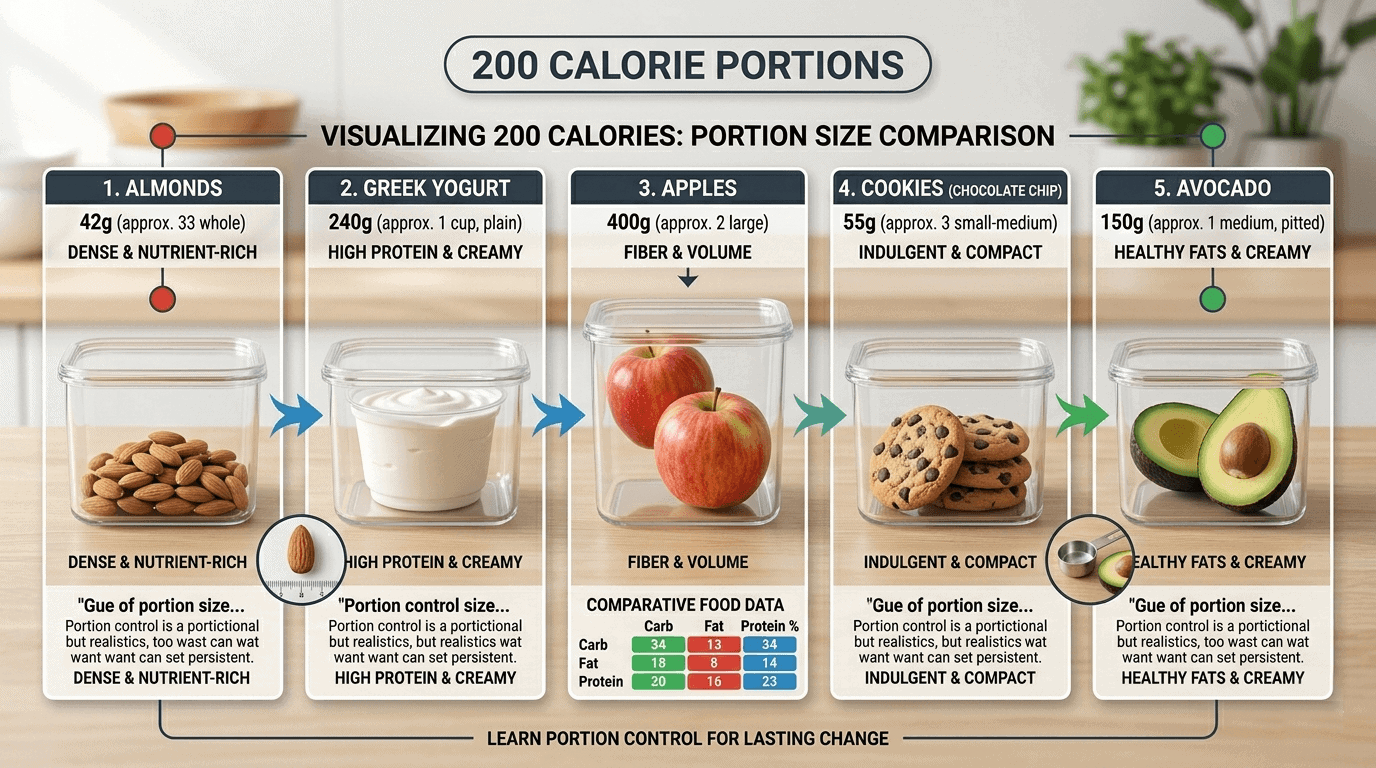
A more realistic starting point is reducing intake by around 200 to 600 calories per day below maintenance. That often produces steady fat loss without destroying energy levels.
For example:
- Maintenance: 2,500 calories
- Weight loss target: 2,000 to 2,300 calories
Or:
- Maintenance: 2,000 calories
- Weight loss target: 1,500 to 1,800 calories
Small deficits feel slower, but they tend to last longer. That usually leads to better long-term results. 3
Why 2,000 Calories Works For Some People But Not Others
The “2,000 calories per day” label on food packaging created confusion for years.
For some people, 2,000 calories creates weight loss. For others, it maintains weight or even causes gain.
A physically active person walking 15,000 steps daily and strength training several times per week may lose weight comfortably on 2,500 calories. Someone sedentary may not.
Your intake needs to match your actual energy expenditure, not generic labels.
Why Some Active People Need 2,500 Calories Or More
People often underestimate how much active bodies require.
A heavier individual who lifts weights, walks regularly, and has decent muscle mass can burn far more calories than expected. Trying to force extremely low calorie targets often backfires through fatigue and binge eating.
This becomes especially important during long-term dieting. Severe restriction increases the chances of quitting altogether.
Better adherence usually beats perfect calorie precision.
How To Calculate Your Starting Calorie Target
You don’t need laboratory testing to get started. A practical estimate works fine.
The goal is progress, not mathematical perfection.
Step One: Estimate Your Maintenance Calories
Use an online calorie calculator or calorie counter app to estimate maintenance calories. Most apps ask for:
- Age
- Height
- Weight
- Activity level
- Goal weight
This gives you a baseline number.
Research reviewing calorie-counting apps between 2013 and 2024 found that digital tracking tools improved self-monitoring and dietary awareness in many adults managing weight-related conditions. The biggest benefit wasn’t magic fat loss. It was consistency. 2
Tracking creates accountability.
Still, avoid choosing “very active” unless your lifestyle genuinely matches it. Many people accidentally overestimate activity levels and start with calorie targets that are too high.
Step Two: Subtract 200 To 600 Calories Per Day
Once you know your estimated maintenance intake, create a moderate deficit.
Examples:
- 2,600 maintenance → 2,100 to 2,400 target
- 2,200 maintenance → 1,700 to 2,000 target
Don’t race to the lowest number possible.
People who slash calories too aggressively often spend weeks exhausted, then rebound into overeating because the plan becomes miserable to maintain.
A slower approach usually produces better compliance and better health outcomes over time. 5
Step Three: Track Progress For Two Weeks
This step matters more than people realise.
Your initial calorie target is only a starting estimate. Real progress determines whether it’s accurate.
Track:
- Daily calorie intake
- Morning body weight
- Energy levels
- Hunger
- Training performance
Look for trends across two weeks instead of obsessing over single days.
If your average weight trends downward gradually, your target is probably working.
Step Four: Adjust Based On Real Results
If nothing changes after two to three weeks, your intake may still be too high.
That doesn’t automatically mean your metabolism is broken.
Portion sizes may be inaccurate. Liquid calories may not be tracked. Weekend eating may erase weekday deficits. Restaurant meals are often underestimated by hundreds of calories.
One study evaluating people learning calorie counting systems found that portion size estimation improves with practice, but beginners regularly misjudge intake early on. 4
That’s normal.
The people who succeed usually aren’t the ones who track perfectly from day one. They’re the ones who keep adjusting instead of quitting after a rough week.
The Best Foods To Eat While Counting Calories
Some foods make dieting far easier than others.
That doesn’t mean you need “perfect” meals or a completely clean diet. It means choosing foods that keep you full for longer while helping you stay inside your calorie target.
Hunger destroys adherence faster than almost anything else.
High-Protein Foods That Keep You Full
Protein is one of the most useful tools for appetite control during weight loss.
Foods like chicken breast, eggs, Greek yogurt, lean beef, cottage cheese, tuna, and protein shakes help increase fullness while supporting muscle retention during a calorie deficit.
Many people notice a major difference in hunger simply by increasing protein intake across meals.
For example:
- Two pastries for breakfast may contain 600 calories and leave you hungry again quickly.
- Eggs, fruit, and Greek yogurt may contain similar calories while keeping you satisfied for hours.
The calorie total matters. Food composition matters too.
Low-Calorie Foods With High Volume
Volume eating works well because your stomach responds partly to food quantity, not just calorie intake.
High-volume foods include:
- Potatoes
- Vegetables
- Fruit
- Oats
- Soup
- Air-popped popcorn
- Lean proteins
A massive salad with chicken and potatoes can sometimes contain fewer calories than a small fast-food meal.
That’s one reason ultra-processed foods become dangerous during dieting. They pack huge calorie loads into small portions.
Foods That Quietly Destroy A Calorie Deficit
Some foods aren’t “bad,” but they become easy to overconsume.
Common examples include:
- Nut butters
- Oils
- Granola
- Cheese
- Takeaway sauces
- Alcohol
- Coffee drinks
- Mixed nuts
Healthy labels don’t cancel calories.
One restaurant salad can exceed 1,200 calories once dressing, cheese, croutons, and sauces are included.
People often assume weight loss failed because their metabolism slowed down. Sometimes they’re simply eating far more than expected.
Why Liquid Calories Add Up Fast
Liquid calories rarely satisfy hunger properly.
A large flavoured coffee, smoothie, fizzy drink, or alcoholic drink can add hundreds of calories without reducing appetite much afterwards.
Drinking two 250-calorie coffees daily adds roughly 3,500 calories every week. That’s potentially enough to wipe out an entire weekly calorie deficit.
Switching to low-calorie drinks often creates one of the easiest fat loss wins available.
How To Track Calories Accurately
Calorie counting only works if your tracking is reasonably accurate.
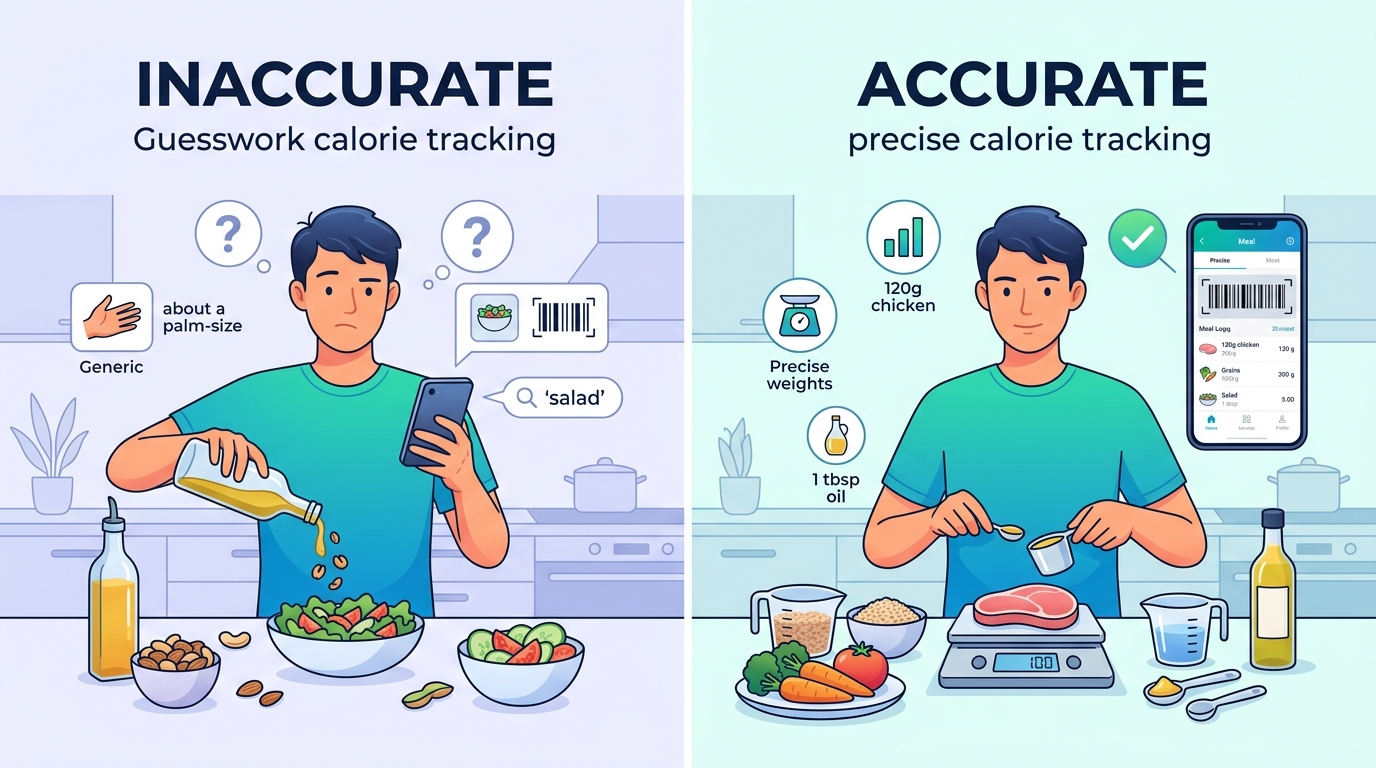
Perfection isn’t necessary. Consistency is.
Using A Calorie Counter App
Most people now track using a calorie counter app because it simplifies the process dramatically.
Apps allow you to:
- Scan barcodes
- Save meals
- Track protein and nutrients
- Log restaurant foods
- Monitor weight trends
The large review of calorie-counting apps published in JMIR mHealth and uHealth found that digital tracking tools improved dietary self-monitoring and engagement across many users with weight-related chronic conditions. 2
That doesn’t mean apps guarantee weight loss. Many people still quit after a few weeks. But apps reduce friction, and lower friction improves consistency.
The easier tracking becomes, the more likely people stick with it.
Why A Food Scale Matters
Eyeballing portions causes problems fast.
People consistently underestimate calorie intake when guessing serving sizes. Research evaluating calorie counting systems found portion estimation improved with practice, but beginners often made substantial errors early on. 4
A tablespoon of peanut butter measured properly looks smaller than most people expect. The same applies to cereal, rice, pasta, and oils.
Food scales remove emotion and guesswork.
You don’t necessarily need to weigh food forever. Many experienced trackers become reasonably accurate over time. Still, using a scale for several weeks teaches portion awareness quickly.
Measuring Oils, Sauces, And Snacks Correctly
Tiny extras become big problems.
Cooking oils, mayonnaise, sauces, butter, cream, and handfuls of snacks can quietly add several hundred calories per day.
A quick example:
- Two tablespoons of olive oil = roughly 240 calories
- Random handful of mixed nuts = 200+ calories
- Sauce-heavy takeaway meal = easily 1,500+ calories
This is why “I barely eat anything” often doesn’t match reality.
Most people remember meals. They forget extras.
How Restaurants And Takeaways Skew Numbers
Restaurant calorie counts are often inaccurate.
Portions vary between chefs. Oils and butter are difficult to estimate. Many meals contain hidden calories from sauces and preparation methods.
A meal listed at 900 calories could realistically exceed 1,300 depending on portion size and ingredients.
That doesn’t mean you can never eat out. It means you should approach restaurant numbers cautiously.
Strategies that help include:
- Ordering grilled proteins
- Asking for sauces separately
- Avoiding liquid calories
- Leaving room in your daily intake beforehand
Flexible control works better than complete restriction.
The “One Bite Here And There” Problem
This catches people constantly.
One biscuit at work. A few chips from somebody else’s plate. Finishing leftovers while cooking dinner.
Individually, they feel insignificant.
Collectively, they can erase your deficit.
Awareness matters more than obsession. You don’t need to panic over every tiny bite. You do need honesty about habits.
Common Mistakes That Slow Weight Loss
Most calorie counting problems come from execution, not the method itself.
Eating Healthy But Ignoring Portions
Healthy foods still contain calories.
Avocados, nuts, olive oil, dark chocolate, granola, and smoothies can all fit inside a good diet. They can also destroy a calorie deficit quickly if portions aren’t controlled.
Weight loss depends on total intake, not whether foods sound healthy on social media.
Overestimating Calories Burned Through Exercise
Fitness trackers regularly overestimate calorie burn.
Many people exercise for 300 calories, then reward themselves with 700 calories of food afterwards.
Exercise helps. It just doesn’t burn as much as people expect.
Walking 8,000 to 12,000 daily steps consistently often contributes more to fat loss than occasional intense workouts followed by overeating.
How Many Calories Does Walking Burn?
Weekend Overeating
A strict weekday diet followed by uncontrolled weekends creates problems.
Example:
- Monday to Friday deficit: -400 calories daily
- Total weekly deficit: -2,000 calories
Then:
- Saturday takeaway and drinks: +2,500 calories
- Sunday overeating: +1,000 calories
The weekly deficit disappears.
Consistency across the entire week matters more than perfection during weekdays.
Choosing Unrealistic Targets
Trying to lose weight too fast usually backfires.
Extremely low calorie targets increase:
- Hunger
- Cravings
- Fatigue
- Muscle loss
- Binge eating risk
Research on low-calorie diets consistently shows that sustainability determines long-term outcomes far more than aggressive short-term restriction. 3
A slower pace that you can maintain beats extreme dieting every time.
Quitting Too Early
People often stop right before progress would have appeared.
Water retention can temporarily hide fat loss for days or weeks. Stress, hormones, sodium, poor sleep, and training can all affect scale weight.
This is why trends matter more than isolated weigh-ins.
Patience matters more than most people want it to.
How Exercise Supports Calorie Counting For Weight Loss
You can lose weight without exercise. Diet controls the calorie deficit.
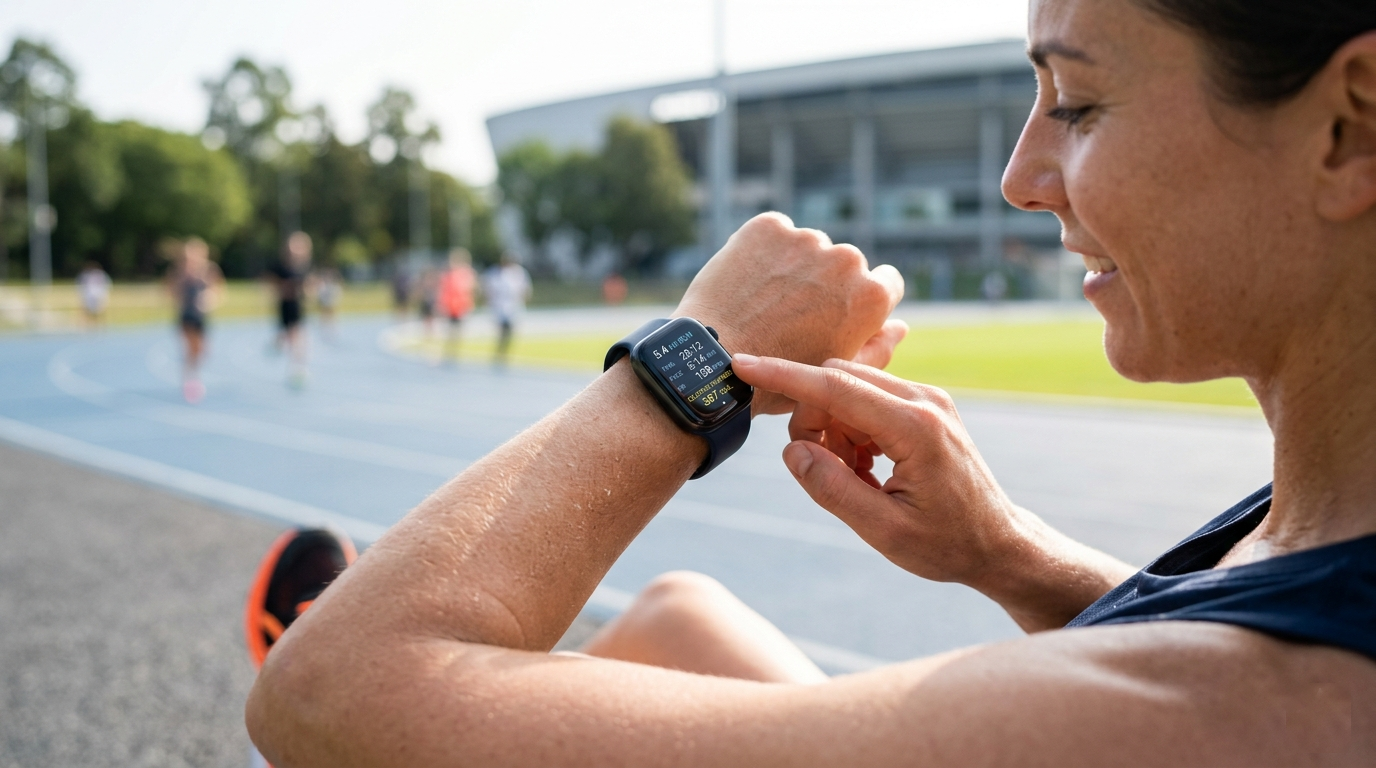
Exercise still helps enormously.
Walking And Daily Activity
Walking is underrated.
It burns calories, improves health markers, reduces stress, and usually doesn’t increase hunger aggressively like intense cardio sometimes can.
Daily movement also compounds over time.
An extra 8,000 to 10,000 daily steps can make a noticeable difference across months.
Strength Training To Preserve Muscle
Strength training helps preserve muscle mass while dieting.
That matters because muscle supports metabolism, strength, physical function, and body composition.
Without resistance training, aggressive dieting increases the risk of losing muscle alongside fat.
You don’t need bodybuilding workouts either. Basic progressive resistance training works well.
Cardio For Extra Calorie Burn
Cardio creates additional calorie expenditure, which can help maintain a larger deficit without reducing food intake further.
Cycling, swimming, running, rowing, and incline walking all work.
The best option is usually the one you’ll actually stick with.
Why Exercise Alone Rarely Works
Exercise alone struggles because food calories are easy to consume quickly.
A takeaway burger meal can contain over 1,500 calories. Burning that through exercise takes far longer than eating it.
This is why calorie counting for weight loss remains so effective. It directly targets intake instead of relying purely on expenditure.
How To Make Calorie Counting Sustainable
The best diet is the one you can continue.
That sounds simple. Most people still ignore it.
Flexible Dieting Vs Restrictive Dieting
Completely banning favourite foods often increases cravings.
Flexible dieting usually works better because it allows occasional treats while maintaining overall calorie control.
You can still eat pizza, desserts, or takeaway meals sometimes. The key is portion awareness and overall balance across the week.
Rigid perfection rarely survives real life.
Planning Meals Ahead Of Time
Planning removes decision fatigue.
People make worse food choices when tired, stressed, hungry, or rushed. Having meals prepared reduces impulsive eating dramatically.
Simple meals often work best:
- Protein source
- Vegetables
- Carbohydrate source
- Controlled fats
Boring doesn’t matter nearly as much as consistency.
Building Better Health At Home
Your environment shapes your behaviour.
Keeping high-calorie snacks constantly visible increases temptation. Stocking easier low-calorie options improves decision-making automatically.
Better health at home often starts with removing friction.
Fruit on the counter gets eaten. Protein meals prepared in advance get used. Hidden junk food usually gets forgotten.
Handling Social Events And Takeaways
Social eating doesn’t need to destroy progress.
Strategies that help include:
- Eating lighter earlier in the day
- Prioritising protein
- Sharing desserts
- Limiting alcohol
- Choosing grilled options
- Avoiding mindless snacking
One meal never ruins progress. Repeated overeating does.
When To Stop Tracking Every Single Day
Some people track calories long term successfully. Others prefer transitioning towards habit-based eating later.
The goal isn’t becoming dependent on an app forever.
The goal is learning portion awareness, calorie awareness, and sustainable eating habits you can maintain naturally.
Signs Your Calorie Target Needs Adjusting
Your body changes during weight loss. Your calorie target may need to change too.
Weight Loss Has Completely Stalled
If weight genuinely hasn’t changed for several weeks despite accurate tracking, your deficit may no longer exist.
Smaller bodies require fewer calories.
Reducing intake slightly or increasing activity may restart progress.
Constant Hunger And Fatigue
Extreme hunger, low energy, poor recovery, irritability, and constant food obsession usually signal that calories are too low.
Pushing harder isn’t always smarter.
Moderate deficits usually produce better adherence and better long-term outcomes. 3
Losing Weight Too Quickly
Rapid weight loss increases the risk of muscle loss, fatigue, and rebound overeating.
Slow, controlled fat loss generally produces better body composition and sustainability.
Reaching Your Goal Weight
Maintenance requires adjustments too.
Many people hit their target weight, then immediately return to old eating habits. Predictably, the weight returns.
Long-term success depends on keeping the habits that created the result in the first place.
Conclusion
Calorie counting works because it creates awareness.
Most people dramatically underestimate how much they eat, especially from snacks, drinks, sauces, restaurant meals, and portion sizes. Tracking intake exposes those patterns quickly. 14
You don’t need perfection. You need honesty and consistency.
A moderate calorie deficit, realistic expectations, high-protein foods, better portion awareness, and sustainable habits usually outperform extreme diets that collapse within weeks. 3
The people who succeed with calorie counting for weight loss rarely have flawless discipline. They simply stay consistent long enough for the maths to work.
Start simple:
- Estimate maintenance calories
- Create a manageable deficit
- Track intake honestly
- Adjust based on results
- Focus on long-term habits instead of quick fixes
Done consistently, those basics work far better than most complicated diet systems ever will.
Frequently Asked Questions About Calorie Counting
What’s the easiest way to count calories for beginners?
For calorie counting beginners, the easiest approach is to start with a mobile app like MyFitnessPal or Cronometer. These apps have built-in food databases with barcode scanning, eliminating manual lookups. Begin by logging meals for 2-3 days without changing anything to establish your baseline intake. Once comfortable, apply a small calorie deficit (300-500 calories) based on your maintenance level. The key for beginners is consistency over perfection—aim to log daily rather than achieve 100% accuracy immediately.
How do I count calories without a kitchen scale?
You can count calories without a scale using portion size comparisons. Use your hand as a guide: a fist-sized portion of grains, a palm-sized portion of protein, and a thumb-sized portion of fats roughly equals 1 serving. For items like rice or pasta, use a coffee mug as a cup measurement. For liquids, use standard glasses (8 oz). Restaurant meals can be logged using their published nutrition information. Packaged foods show serving sizes on labels. While a scale provides precision, these estimation methods help you count calories without equipment—accuracy improves with practice and is 80% effective for weight loss even without exact measurements.
What’s the best method to count calories for fast weight loss?
The best method to count calories for fast weight loss balances speed with sustainability. Create a moderate calorie deficit of 500-750 calories daily (resulting in 1-1.5 lbs/week loss), which is faster than 1 lb/week but sustainable enough to maintain muscle. Use an app rather than manual logging to save time. Focus on whole foods that are easier to track than restaurant meals. Track consistently but don’t obsess over ±50 calorie accuracy. Combine calorie counting with resistance training to preserve muscle during faster weight loss. Most importantly, ensure your deficit isn’t so extreme that it becomes unmaintainable—this is actually the best method for achieving results that last.
Is counting macros better than just counting total calories?
Counting macros (protein, carbohydrates, fats) provides benefits beyond total calorie counting, particularly for body composition changes. Adequate protein (0.7-1g per pound of body weight) during a calorie deficit preserves muscle mass during weight loss. Fiber-rich carbs and healthy fats improve satiety, making the deficit easier to maintain. However, total calories ultimately determine weight loss—you cannot gain weight in a true calorie deficit, regardless of macro distribution. The best approach combines both: count total calories for weight loss, then optimize macros within that calorie target for better results, muscle retention, and adherence. A 500-calorie daily deficit yields 1 pound of weight loss weekly; 750 calories daily yields 1.5 pounds weekly
How accurate does calorie counting need to be for weight loss?
Calorie counting for weight loss doesn’t require perfection—research shows ±10-15% accuracy is sufficient for consistent results. This means if your target is 2000 calories, anything between 1700-2300 still produces weight loss. Most tracking apps are ±15-20% accurate due to database variations and user logging errors. What matters more than perfect accuracy is consistency: logging the same way daily (same app, same measurement methods) allows your body’s response to calibrate your estimates. If you’re losing 1-2 lbs weekly, your calorie estimation is accurate enough. Adjust only if progress stalls for 2-3 weeks.
Have a Question About Calorie Counting?
We’ve covered the fundamentals of calorie counting for weight loss, but everyone’s situation is unique. If you have specific questions about your calorie intake, health conditions, or personalized recommendations, please share them in the comments below. Our community is here to help, and your question might assist others on the same journey.
Note: For medical concerns or personalized nutrition advice, consult with a registered dietitian or healthcare provider.
References
1 JAMA Network. Counting Calories as an Approach to Achieve Weight Control
https://jamanetwork.com/journals/jama/article-abstract/2669738
2 JMIR mHealth and uHealth. Calorie-Counting Apps for Monitoring and Managing Calorie Intake in Adults Living With Weight-Related Chronic Diseases: Decade-Long Scoping Review (2013-2024)
https://mhealth.jmir.org/2026/1/e64139/
3 Obesity Research. Low-Calorie Diets and Sustained Weight Loss
https://onlinelibrary.wiley.com/doi/full/10.1038/oby.2001.133
4 British Journal of Nutrition. Empirical evaluation of the ability to learn a calorie counting system and estimate portion size and food intake
https://www.cambridge.org/core/journals/british-journal-of-nutrition/article/empirical-evaluation-of-the-ability-to-learn-a-calorie-counting-system-and-estimate-portion-size-and-food-intake/4033A89448005363F7E40C538F3E9118
5 Controlling calories–the simple approach
https://www.proquest.com/openview/705771a48448036f6b8436cf2bc969d7/1?pq-origsite=gscholar&cbl=37012
Authoritative Sources & Resources
The following evidence-based resources support calorie counting strategies:
- National Institutes of Health (NIH) – Weight Management Resources
- Mayo Clinic – Weight Loss & Healthy Eating
- Healthline – Calorie Counting Guide
- USDA FoodData Central – Nutritional Information Database
- Academy of Nutrition and Dietetics
- CDC – Healthy Weight Management
- NHS – Weight Loss Resources
- American Heart Association – Nutrition & Fitness
- American Diabetes Association – Nutrition Resources
- Nutritionix – Restaurant & Food Calorie Database
- FatSecret – Calorie Counter Community
- MyFitnessPal – Leading Calorie Tracking App
- Cronometer – Micronutrient Tracking
- PubMed – Peer-Reviewed Nutrition Studies
- NIH – Physiology of Weight Loss
- American Psychological Association – Eating & Weight
- Nestlé Health Science – Nutrition Research
- Institute of Food Technologists – Food Science
- Baylor College of Medicine – Nutrition Research
- Journal of the International Society of Sports Nutrition
- British Nutrition Foundation – Evidence-Based Nutrition