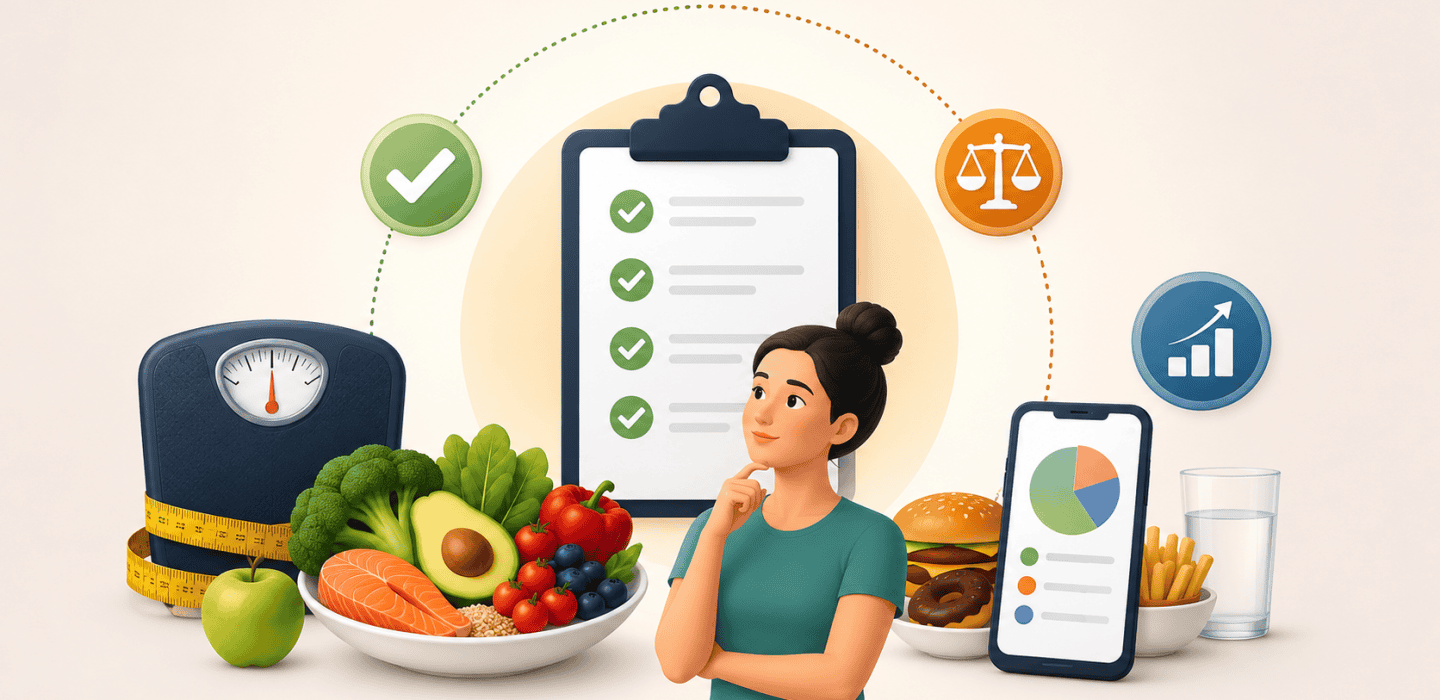
Is Calorie Counting The Best Way To Lose Weight?
Key Takeaways
- Calorie counting works because weight loss still depends on creating a calorie deficit. The challenge is that hunger, stress, food quality, and habits all influence how easy that deficit feels. 1
-
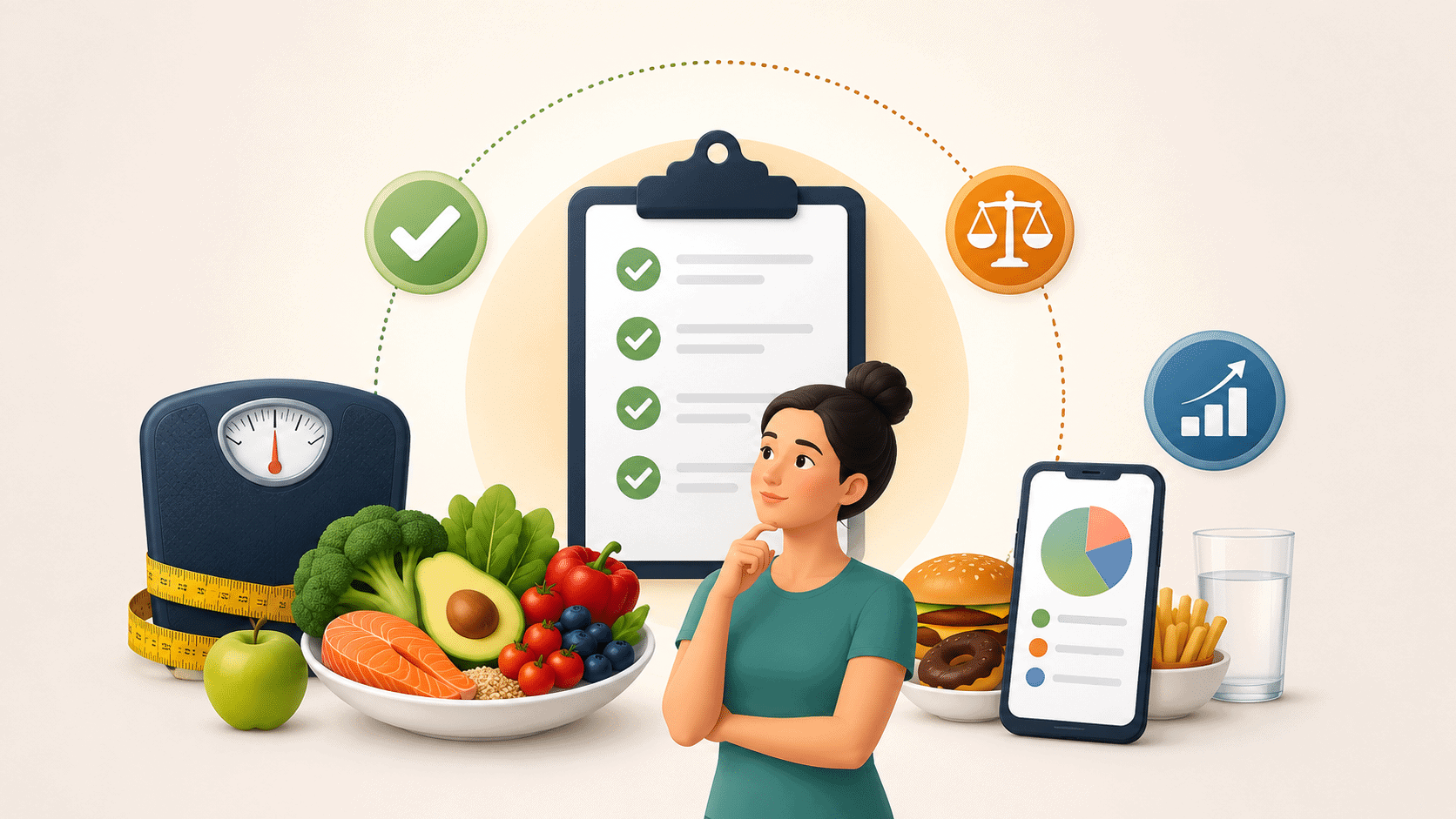
Tracking calories helps many people spot hidden overeating from snacks, drinks, oils, sauces, and oversized portions.
-
High-protein and high-fibre foods usually improve fullness, making it easier to eat fewer calories without feeling constantly hungry. 2
-
Calorie counting is useful, but it is not perfect. Food labels, restaurant meals, and fitness trackers can all create inaccurate estimates.
-
The best weight loss method is the one you can follow consistently for months without burning out.
Read on for the full breakdown.
Introduction
Most people trying to lose weight eventually hear the same advice: “Eat fewer calories than you burn.”
It sounds simple. Sometimes it works brilliantly. Other times people track every meal, exercise constantly, and still feel stuck. Hunger climbs, motivation drops, and the tracking app gets deleted a few weeks later.
That frustration explains why so many people ask: is calorie counting the best way to lose weight?
The honest answer is both yes and no.
Calorie counting can absolutely work. Nearly every successful fat loss approach depends on creating a calorie deficit somehow. If your body consistently uses more energy than you consume, weight usually drops.
The problem is that real life is messier than a spreadsheet.
Stress affects appetite. Sleep changes cravings. Ultra-processed foods make overeating easy. Restaurant meals often contain far more calories than people expect. Even food labels can legally round values down in some cases.
Research has also challenged the idea that calorie reduction alone explains long-term weight loss success. One review published in Perspectives on Psychological Science argued that sustainable weight management requires a much wider and longer-term approach than simply focusing on calorie intake. 1
That does not make calorie counting useless. Far from it.
For many people, tracking food creates awareness they never had before. A few handfuls of nuts become 400 calories. Weekend takeaways suddenly explain why progress stalled. Coffee drinks turn out to contain more calories than breakfast.
Still, calorie counting is a tool. Not magic.
Some people love structure and numbers. Others become mentally exhausted from tracking every gram of food. The method matters less than whether someone can maintain it consistently without feeling miserable.
What Is Calorie Counting and How Does It Work?
Calorie counting is based on energy balance.
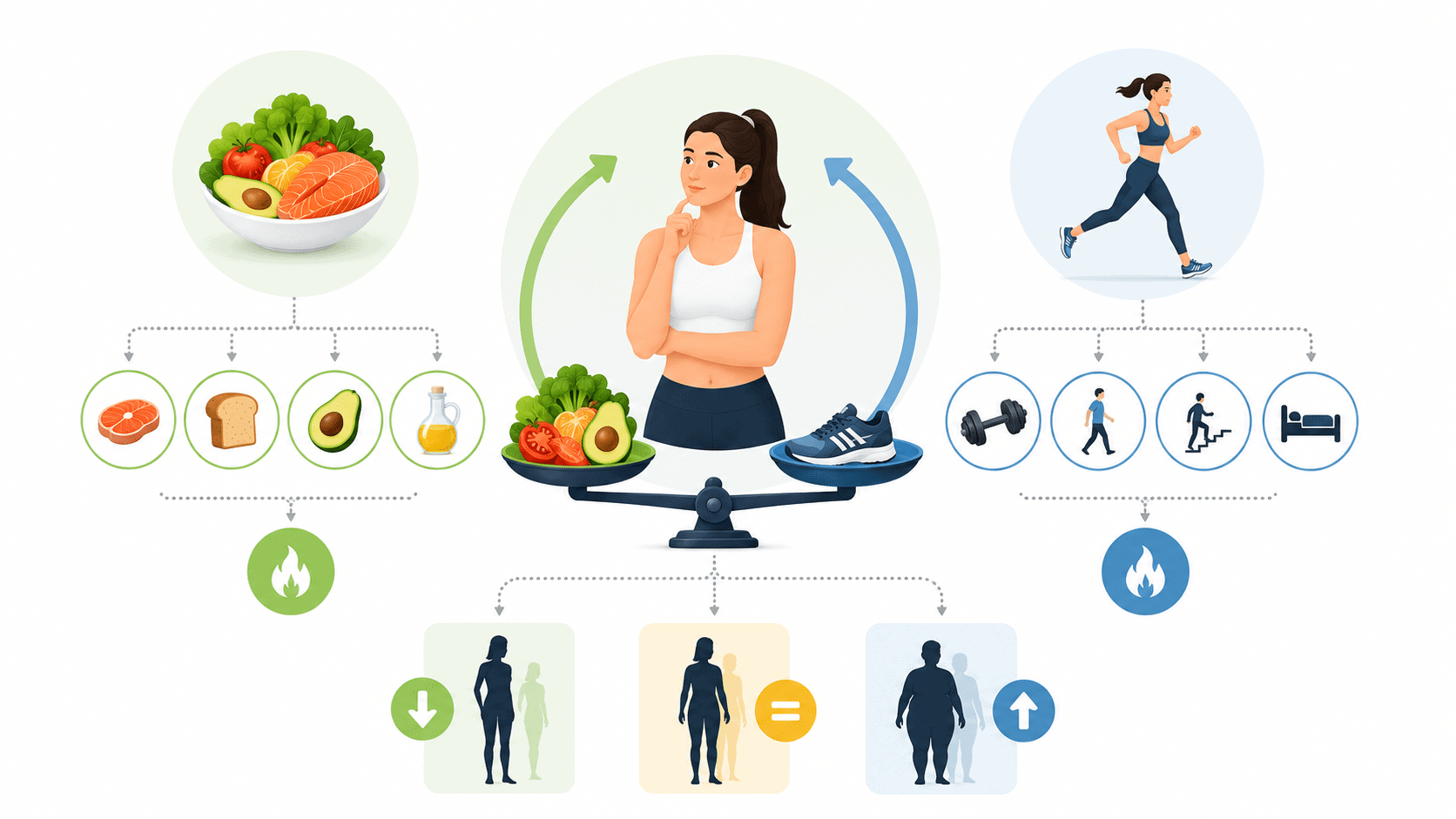
Your body burns energy constantly through breathing, movement, digestion, exercise, and basic survival functions. Food replaces that energy.
When you consistently consume more energy than your body uses, weight tends to increase. When you consistently consume less, weight tends to decrease.
What a Calorie Actually Measures
A calorie is simply a unit of energy.
Protein and carbohydrates contain roughly four calories per gram. Fat contains nine. Alcohol contains seven.
Your body uses this energy continuously, even while resting. Most people actually burn the majority of their daily calories through basic bodily functions rather than exercise. This is called your basal metabolic rate, or BMR.
That surprises many people.
An intense workout may burn 300 to 500 calories. A large takeaway pizza can easily contain over 2,000. This is why nutrition typically drives weight loss more than exercise alone.
Understanding Daily Calorie Needs
There is no universal calorie target.
A tall active man with high muscle mass may need over 3,000 calories a day to maintain his weight. A smaller sedentary woman may maintain on far less.
Daily calorie needs depend on:
- Age
- Sex
- Height
- Body weight
- Muscle mass
- Activity level
- Genetics
This is why generic “1,200 calorie diets” often fail. Some people end up unnecessarily starving themselves, while others still eat above maintenance without realizing it.
Most calorie calculators provide estimates, not exact answers. Human metabolism varies more than people expect.
The Role of CICO in Weight Loss
You have probably seen the term CICO online. It stands for “Calories In, Calories Out.”
The concept itself is scientifically sound. Body weight changes are heavily influenced by energy balance.
The confusion starts when people oversimplify the process.
Your body adapts to dieting. Hunger often rises when calories drop. Energy levels may fall. People unconsciously move less during the day. Cravings can increase.
That is why aggressive dieting often becomes harder over time.
Critics sometimes attack CICO as if it is false, but most arguments are really attacking oversimplified versions of it. The human body is not a fixed calculator.
Still, calorie deficits remain necessary for fat loss.
Different diets usually work because they help people maintain that deficit more easily. High-protein diets increase fullness. Intermittent fasting shortens eating windows. Low-carb diets reduce appetite for some people.
The method changes. The energy deficit usually does not.
Is Calorie Counting The Best Way To Lose Weight for Everyone?
This is where the conversation becomes more nuanced.
Calorie counting can be extremely effective. It can also become mentally draining very quickly depending on personality, lifestyle, and relationship with food.
Some people love structure and data. Others feel trapped the moment every snack requires weighing and logging.
Why Calorie Counting Works Well for Beginners
Many people dramatically underestimate how much they eat in a day.
Tracking changes that fast.
Someone who logs food for the first time often discovers hidden calorie sources everywhere:
- Cooking oils
- Sugary coffees
- Weekend alcohol
- Sauces
- “Healthy” snack bars
- Random bites while cooking
That awareness alone can create meaningful weight loss.
Calorie counting also creates accountability. A takeaway no longer feels invisible once the numbers appear clearly inside an app.
People also start learning which foods actually keep them full. Six hundred calories of lean protein, potatoes, fruit, and vegetables feels very different from 600 calories of pastries or crisps.
Where Calorie Counting Often Fails
The biggest weakness of calorie counting is sustainability.
Most people do not want to weigh chicken breast and scan barcodes forever. Tracking fatigue eventually appears. Social events become awkward. Restaurant meals feel stressful.
Accuracy also becomes a major issue.
Food labels are not perfectly precise. Restaurant calorie counts vary massively. Fitness trackers regularly overestimate calories burned during exercise.
Psychology matters too.
Some people become obsessed with numbers and guilty over small fluctuations. Weight loss turns into a constant mental battle.
Research comparing calorie counting with broader healthy eating approaches found that diets emphasizing fruits, vegetables, legumes, nuts, and minimally processed foods may improve satiety during active weight loss. 2
That matters because hunger is one of the biggest reasons diets fail.
A moderate daily calorie deficit someone can sustain for six months usually beats an aggressive crash diet abandoned after three weeks.
The Difference Between Short-Term and Long-Term Results
Almost any diet can produce short-term results.
Low-carb diets reduce water weight quickly. Severe calorie restriction causes dramatic early scale drops. Detox plans create temporary momentum.
The real challenge starts later.
Can someone realistically maintain the routine during stressful weeks, holidays, social events, and weekends? That matters far more than whether a diet works perfectly for 14 days.
Some people successfully track calories for years because they enjoy the structure. Others eventually burn out and regain weight once tracking stops.
Long-term success usually comes down to repeatable habits rather than perfection.
Why Food Quality Still Matters During Weight Loss
A calorie deficit drives weight loss, but food quality heavily influences how difficult that process feels.
This is where many online debates become misleading.
Calories matter. Nutrition matters too.
Protein, Fibre, and Satiety
Protein and fibre help people stay fuller for longer.
High-protein meals tend to reduce hunger and preserve muscle mass during dieting. Fibre slows digestion and improves fullness.
That combination matters because hunger destroys consistency.
A sugary breakfast cereal may leave someone hungry again within two hours. Eggs, oats, berries, and Greek yogurt often keep hunger controlled much longer despite similar calorie totals.
Research comparing calorie counting with MyPlate-style eating patterns highlighted this exact point. Minimally processed plant foods improved satiety signaling despite active weight loss. 2
That does not mean calories suddenly stop mattering. It means food quality changes how manageable calorie control feels across an entire day.
Ultra-Processed Foods vs Whole Foods
Ultra-processed foods make weight loss harder for many people.
They are designed to taste highly rewarding while encouraging overeating. Many combine refined carbohydrates, fats, salt, and flavorings in ways that bypass normal fullness signals.
Compare 600 calories of fast food with 600 calories of lean meat, potatoes, vegetables, and fruit. The second meal usually provides far more fullness and volume.
Research continues to support the idea that minimally processed foods improve satiety and eating control. 2
Instead of surviving on tiny portions all day, smarter weight loss plans often focus on foods that naturally reduce hunger.
High-Protein Foods for Weight Loss
Can You Lose Weight Eating Junk Food?
Technically, yes.
Someone could lose weight eating highly processed food if they still maintained a calorie deficit.
The problem is sustainability and health.
Low-nutrition diets often increase hunger, reduce energy levels, and make consistency much harder. Weight loss alone does not automatically improve overall nutrition.
Calories determine weight change. Nutrition influences how your body feels while getting there.
Common Calorie Counting Mistakes That Slow Progress
Many people think calorie counting failed when the real issue was inaccurate tracking.
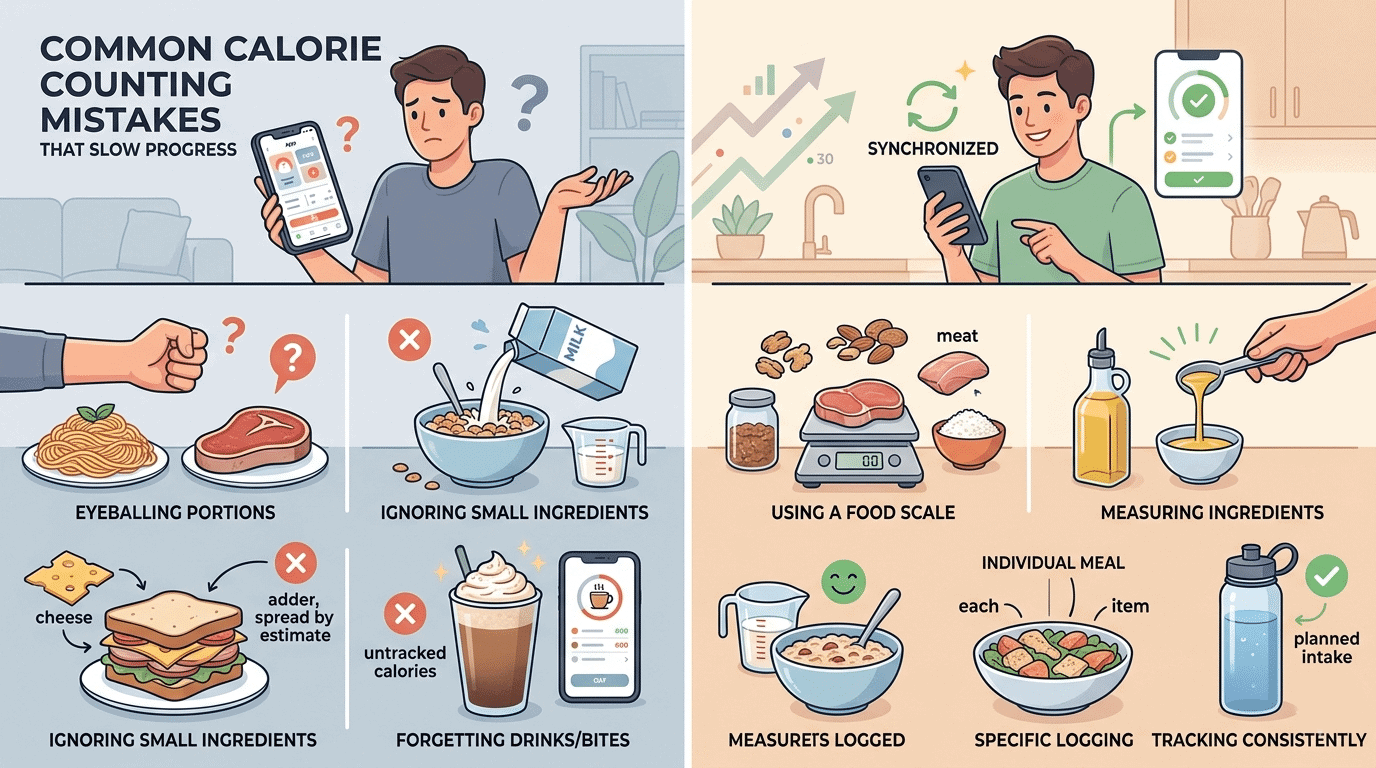
Small mistakes compound quickly.
Underestimating Portion Sizes
Humans are terrible at estimating portions.
One tablespoon of peanut butter easily becomes two. Cooking oils poured directly into pans often add hundreds of unnoticed calories across a week.
This becomes especially important with calorie-dense foods:
- Nuts
- Oils
- Cheese
- Nut butters
- Sauces
- Takeaways
A food scale feels tedious initially, but many people quickly realize they were underestimating intake by a large margin.
Ignoring Weekends and “Cheat” Meals
This is one of the most common reasons progress stalls.
Someone eats in a calorie deficit Monday through Friday, then wipes out the entire weekly deficit over the weekend.
A takeaway meal, drinks night, and desserts can easily push calorie intake thousands above target in a single day.
Weight loss happens across weekly averages, not isolated meals.
Eating Back Exercise Calories
Fitness trackers often overestimate calories burned during exercise.
Someone may believe they burned 700 calories during a workout, then reward themselves with enough food to erase the actual energy expenditure completely.
Exercise absolutely supports weight loss and long-term health. The issue is that exercise alone burns fewer calories than most people assume.
Calories Burned Walking vs Running
Tracking Foods Listed as “0 Grams” or Low Calorie
Food labeling rules create loopholes.
Some products can list “0 grams” of certain ingredients if serving sizes fall below legal thresholds. Cooking sprays are a common example.
Individually, these calories may seem insignificant. Across multiple uses a day, they add up.
This does not mean someone should obsess over every gram. It simply means calorie tracking is never perfectly precise.
Alternatives to Calorie Counting
Some people lose weight very successfully without tracking calories at all.
They simply use different systems to control intake.
Portion Control Methods
Portion-based systems simplify decision-making.
Instead of tracking every calorie, people use visual guides:
- Half the plate vegetables
- Palm-sized protein portions
- Smaller plates
- Hand-size measurements
This still influences calorie intake indirectly while feeling less restrictive.
Mindful Eating and Hunger Awareness
Modern eating habits encourage distraction.
People eat while scrolling phones, watching television, or working. Meals become automatic.
Mindful eating slows the process down.
Simple habits help:
- Eating without screens
- Chewing more slowly
- Pausing during meals
- Recognizing fullness cues
Many people discover they regularly eat past fullness simply because they never slow down enough to notice.
Low-Carb, Mediterranean, and High-Protein Diets
Different diets often succeed for similar reasons.
Most effective diets improve food quality, increase protein intake, reduce processed foods, and naturally lower calorie intake.
The best diet is rarely the one producing the fastest short-term results. It is the one someone can realistically maintain for a year.
Intermittent Fasting
Intermittent fasting changes meal timing rather than food choices directly.
Some people naturally eat fewer calories by shortening their eating window each day. Others hate it completely.
That is why rigid “best diet” claims rarely hold up in practice.
Intermittent Fasting for Beginners
The Psychology Behind Sustainable Weight Loss
Weight loss looks mathematical on paper. In reality, psychology often determines success more than spreadsheets do.

People overeat because stress, habits, convenience, emotions, and environment all influence behavior.
The review published in Perspectives on Psychological Science argued that effective long-term weight management requires a wider approach than simply focusing on calorie intake alone. 1
Why Restriction Often Backfires
Aggressive dieting creates predictable problems.
People slash calories too hard, feel miserable, then binge once motivation collapses. The cycle repeats.
Moderate deficits usually work better because they feel survivable.
Sustainability beats intensity almost every time.
Building Habits That Last
People who maintain weight loss long term usually build repeatable systems:
- Consistent meals
- Higher protein intake
- Better sleep
- Regular movement
- Controlled portions
None of these habits are glamorous. They work because they reduce decision fatigue.
When Tracking Can Become Unhealthy
Calorie counting can become unhealthy for some people.
Warning signs include:
- Anxiety around eating out
- Obsessive weighing
- Fear of untracked foods
- Constant guilt after meals
In those situations, stepping away from tracking may improve long-term outcomes.
Can Calorie Counting Improve Nutrition and Health Awareness?
One underrated benefit of tracking is education.
Many people learn more about nutrition during a few months of tracking than they did in years beforehand.
Learning Macronutrients and Food Composition
Tracking reveals patterns quickly.
Someone may discover they eat far less protein than expected or almost no fibre across an entire day.
That awareness often improves food choices beyond calorie totals alone.
How Much Protein Do You Need Daily?
Using Apps and Labels More Effectively
Food tracking apps are useful, but they are not flawless.
Database entries contain errors. Restaurant meals vary. User-submitted foods may be inaccurate.
Consistency matters more than perfect precision.
Can You Use an HSA for Weight Loss Programs?
In some cases, yes.
Certain medically necessary weight management programs or nutrition counseling may qualify under an HSA depending on provider guidance and plan rules.
People considering this route should verify details directly with their provider or HSA administrator.
The Best Approach Depends on the Person
There is no universally perfect diet.
Some people genuinely thrive with calorie counting. Others do far better focusing on food quality, portion control, and habits without strict tracking.
Who Benefits Most From Calorie Counting
Tracking often works well for:
- Beginners
- Data-driven personalities
- People unaware of portion sizes
- Frequent snackers
For these people, calorie counting creates clarity quickly.
Who May Do Better Without Tracking
Others may struggle with strict tracking, especially people with food anxiety, obsessive tendencies, or a history of disordered eating.
Mental sustainability matters just as much as physical results.
Combining Tracking With Better Nutrition Habits
The best long-term results usually combine calorie awareness with:
- Better food choices
- Higher protein intake
- Regular movement
- Better sleep
- Portion awareness
That combination addresses both the mathematics and psychology of weight loss.
Conclusion
So, is calorie counting the best way to lose weight?
For some people, absolutely. It creates awareness, structure, and accountability quickly. Many successful fat loss journeys begin with tracking because it exposes hidden eating habits that were quietly sabotaging progress.
But calorie counting is not a complete solution on its own.
Food quality matters. Hunger matters. Stress, sleep, habits, and sustainability all influence whether someone can maintain a calorie deficit long enough to see lasting results. Research increasingly supports taking a broader long-term approach rather than focusing only on calorie intake. 1
The most effective weight loss strategy is usually the one someone can repeat consistently without feeling miserable.
That might involve detailed calorie tracking. It might involve portion control, higher-protein meals, fewer processed foods, intermittent fasting, or simply building more awareness around eating habits.
Calories still count. Human behavior counts too.
References
1 “Reducing Calorie Intake May Not Help You Lose Body Weight.” Perspectives on Psychological Science. Available at: https://journals.sagepub.com/doi/full/10.1177/1745691617690878
2 “Comparing Calorie Counting versus MyPlate Recommendations for Weight Loss.” National Center for Biotechnology Information. Available at: https://www.ncbi.nlm.nih.gov/books/NBK602536/